

Inductively Coupled Plasma – Mass Spectrometer (ICP-MS)
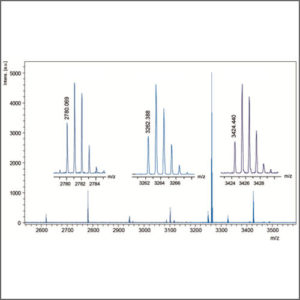
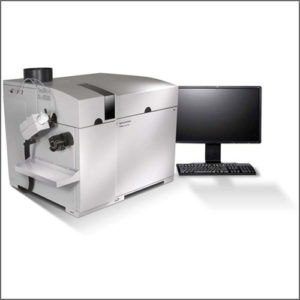
ICP-MS is a type of mass spectrometry which is capable of detecting metals and several non-metals at extreme low concentrations.
- Description
| Testing Method | Inductively Coupled Plasma – Mass Spectrometer (ICP-MS) |
| Description | Inductively coupled plasma mass spectrometry (ICP-MS) is a type of mass spectrometry which is capable of detecting metals and several non-metals at concentrations as low as one part in 10^15 (part per quadrillion, ppq) on non-interfered low-background isotopes. This is achieved by ionizing the sample with inductively coupled plasma and then using a mass spectrometer to separate and quantify those ions.
Inductively coupled plasma is plasma that is energized (ionized) by inductively heating the gas with an electromagnetic coil, and contains a sufficient concentration of ions and electrons to make the gas electrically conductive. Even a partially ionized gas in which as little as 1% of the particles are ionized can have the characteristics of a plasma (i.e., response to magnetic fields and high electrical conductivity). The plasmas used in spectrochemical analysis are essentially electrically neutral, with each positive charge on an ion balanced by a free electron. In these plasmas the positive ions are almost all singly charged and there are few negative ions, so there are nearly equal amounts of ions and electrons in each unit volume of plasma.
For coupling to mass spectrometry, the ions from the plasma are extracted through a series of cones into a mass spectrometer, usually a quadrupole. The ions are separated on the basis of their mass-to-charge ratio and a detector receives an ion signal proportional to the concentration.
The concentration of a sample can be determined through calibration with certified reference material such as single or multi-element reference standards. ICP-MS also lends itself to quantitative determinations through isotope dilution, a single point method based on an isotopically enriched standard.
Other mass analyzers coupled to ICP systems include double focusing magnetic-electrostatic sector systems with both single and multiple collector, as well as time of flight systems (both axial and orthogonal accelerators have been used). |
| More Information | Wikipedia: Inductively Coupled Plasma – Mass Spectrometry |
Related Products
-
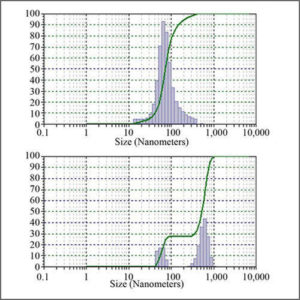
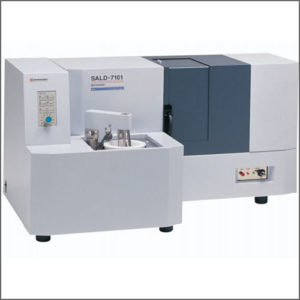
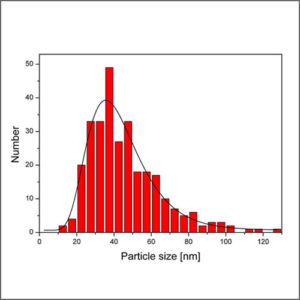
Particle Size Analyzer
Particle size analyzer provides accurate, reliable particle size distribution measurements from nanometers to millimetres.
-
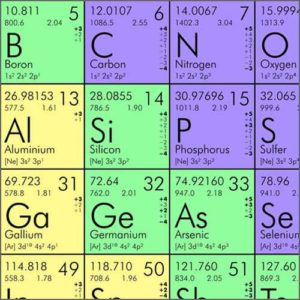
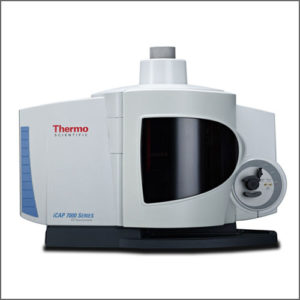
Inductively Coupled Plasma – Optical Emission Spectrometry (ICP-OES)
ICP-OES is an analytical technique for the detection of trace metals in a sample using the emission spectra from the sample.
-
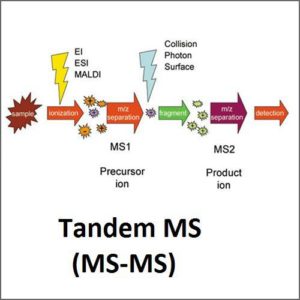
High Performance Liquid Chromatography – Mass Spectrometry (HPLC-MS)
High performance liquid chromatography – mass spectrometry (HPLC-MS) combines the physical separation capabilities of liquid chromatography with the mass analysis capabilities of mass spectrometry.
-
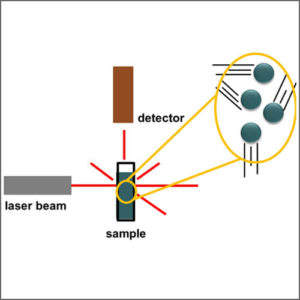
Laser Light Scattering (LLS)
Laser light scattering (LLS) is used to determine size of various particles including proteins, polymers, micelles and nanoparticles.
-
Size Exclusion Chromatography (GPC/GFC)
Size-exclusion chromatography is a chromatographic method in which molecules in solution are separated by their size or by their molecular weight.